




















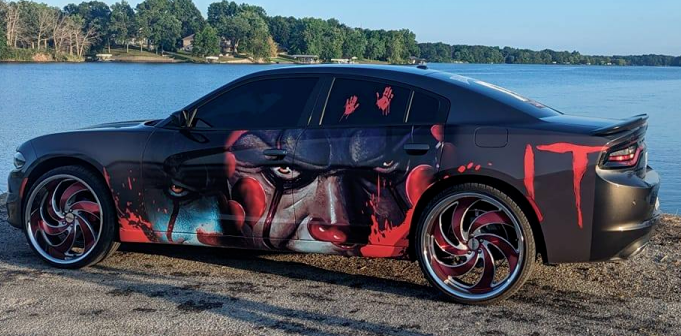
Horror-themed vehicle customization has grown steadily over the past decade, and among all horror icons, Pennywise stands in a category of his own. A Pennywise decal is more than a character graphic—it is a visual statement that blends pop culture, psychological horror, and bold automotive styling. Whether applied to cars, motorcycles, helmets, or windows, Pennywise decals are designed to provoke attention, emotion, and unmistakable presence.
This article explores why Pennywise decals remain popular, how they fit into modern car customization culture, what styles are available, how to apply them correctly, and how to avoid common mistakes when integrating horror graphics into a vehicle design.
1. Why Pennywise Is a Popular Decal Choice
Pennywise, originating from Stephen King’s IT, represents a rare combination of mainstream recognition and unsettling imagery. Unlike generic horror graphics, Pennywise evokes:
- Psychological tension rather than simple shock
- A recognizable face with emotional contrast
- Strong visual storytelling through expression alone
This makes a Pennywise decal instantly identifiable even at a distance, which is a key reason it translates well to vehicle graphics.
For enthusiasts, Pennywise decals are often chosen to express:
- A love for horror cinema
- Dark or edgy personal aesthetics
- Rebellion against clean, minimal car styling
- The desire to stand out at meets or shows
2. The Role of Horror Decals in Car Culture
Horror-themed decals have become a distinct subcategory within automotive customization. Much like anime wraps, skull graphics, or cyberpunk visuals, horror decals represent identity and mood rather than performance.
A Pennywise decal fits particularly well into:
- Show cars
- Night-driven vehicles
- Halloween or seasonal builds
- Dark-themed wraps (black, red, gray, matte finishes)
Unlike full wraps, decals allow owners to add character without committing to permanent paint or full-vehicle graphics.
3. Types of Pennywise Decals
Not all Pennywise decals are the same. Design style plays a major role in how the final result is perceived.
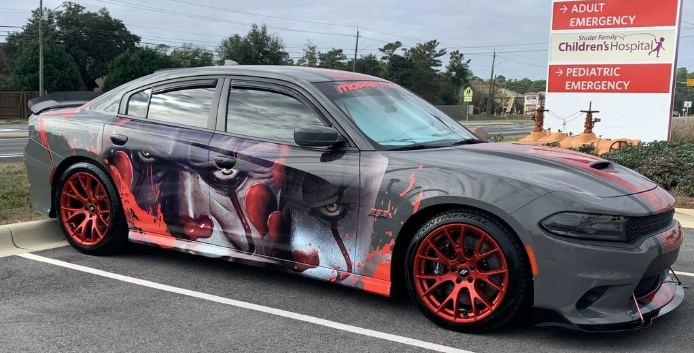
3.1. Portrait-Style Pennywise Decals
These focus on Pennywise’s face or upper body:
- High-detail illustrations
- Intense eye contact
- Emotional contrast between smile and menace
They are commonly placed on:
- Doors
- Rear quarter panels
- Hoods
- Motorcycle fairings
3.2. Minimalist Silhouette Designs
These designs use:
- Simplified outlines
- Red balloon motifs
- Shadow-based imagery
Minimalist Pennywise decals are popular among owners who want subtle horror elements without overwhelming the vehicle.
3.3. Aggressive Horror Artwork
This style emphasizes:
- Sharp teeth
- Blood effects
- Dramatic lighting
- High-contrast colors
These decals are often paired with black or dark wraps to maximize visual impact.
3.4. Text-and-Graphic Combinations
Common phrases include:
- “You’ll float too”
- Balloon imagery paired with typography
- Horror-themed slogans
Text-based Pennywise decals are usually applied to windows or bumpers.
4. Best Vehicles and Surfaces for Pennywise Decals
A Pennywise decal can work on many surfaces, but placement matters.
4.1. Cars
Popular locations include:
- Rear side windows
- Quarter panels
- Door panels
- Hood corners
- Trunk lids
Smooth, flat surfaces provide the cleanest appearance and longest durability.
4.2. Motorcycles
Pennywise decals are commonly used on:
- Fairings
- Gas tanks
- Helmets
- Windscreens
Motorcycle decals benefit from high-quality vinyl due to exposure to wind, heat, and vibration.
4.3. Helmets
Helmet decals require:
- Precision cutting
- Heat-resistant vinyl
- Clear-coat compatibility
A Pennywise helmet decal is often used as a statement piece at shows or group rides.
5. Material Quality and Print Considerations
The quality of a Pennywise decal depends heavily on materials and printing methods.
5.1. Vinyl Type
High-quality decals use:
- Cast vinyl (preferred)
- UV-resistant inks
- Pressure-sensitive adhesive
Cheap vinyl often fades quickly or peels at edges.
5.2. Finish Options
Common finishes include:
- Gloss (high impact)
- Matte (dark, subtle aesthetic)
- Satin (balanced look)
The finish should complement the vehicle’s paint or wrap.
5.3. Color Accuracy
Pennywise designs rely on:
- Accurate skin tones
- Deep reds
- Strong contrast
Poor printing can make the artwork look flat or cartoonish, reducing its impact.
6. Installation Best Practices
Even the best Pennywise decal can look unprofessional if installed incorrectly.
6.1. Surface Preparation
Before application:
- Wash the area thoroughly
- Remove wax or grease
- Dry completely
Any contamination will affect adhesion.
6.2. Alignment and Spacing
Take time to:
- Measure placement
- Check symmetry
- Step back and review positioning
Rushed installation often leads to crooked or awkward placement.
6.3. Temperature Matters
Vinyl should be applied in moderate temperatures to avoid bubbling or cracking.
7. Common Mistakes to Avoid
7.1. Overcrowding the Vehicle
One strong Pennywise decal is often more effective than multiple competing graphics.
7.2. Poor Placement Choices
Avoid placing detailed artwork on:
- Heavily curved surfaces
- Door handles
- Panel seams
These areas distort the image over time.
7.3. Mismatched Style
A Pennywise decal should align with the overall vehicle theme. Mixing horror decals with unrelated styles can feel uncoordinated unless done intentionally.
8. Legal and Visibility Considerations
Some regions restrict:
- Windshield decals
- Obstructed windows
- Reflective materials
Always verify local regulations before applying large graphics, especially on glass.
9. Why Pennywise Decals Continue to Trend
The popularity of Pennywise decals persists because:
- Horror culture remains mainstream
- Vehicle customization values individuality
- Decals offer flexibility and reversibility
- Pennywise remains visually iconic across generations
Unlike short-lived trends, horror iconography has long-term appeal when executed tastefully.
Conclusion
A Pennywise decal is more than a horror graphic—it is a statement of personality, creativity, and cultural appreciation. When designed well and applied correctly, it transforms a vehicle into a moving piece of visual storytelling. Whether subtle or aggressive, minimalist or detailed, the key to a successful Pennywise decal lies in quality, placement, and cohesion with the overall build.
For enthusiasts who appreciate horror aesthetics and want their vehicle to reflect a darker edge, Pennywise decals remain one of the most striking and recognizable choices available.

