





















She’d had pretty normal digestion her whole life. Then, around 40, her stomach became unpredictable. Bloating after meals. Urgency. Days where she could barely leave the house. And somewhere in there, the anxiety started showing up too. Tight chest. Racing thoughts. A low-level sense of dread she couldn’t explain.
Her doctor attributed the gut symptoms to stress and the anxiety to, well, anxiety. She left with a referral for a therapist and a pamphlet about deep breathing.
Nobody connected the two.
That connection, it turns out, is one of the most well-supported and most consistently ignored pieces of modern health research.
The Second Brain You Didn’t Know You Had
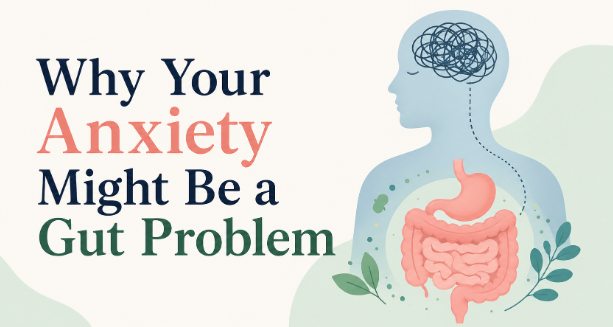
Your gut contains something called the enteric nervous system. It runs along the length of your digestive tract and is part of the central nervous system. Researchers sometimes call it the “second brain.”
The greatest concentration of neurotransmitter receptors in the body is located in the gut, not in the skull. The gut contains more neurotransmitters than the brain does. Serotonin, dopamine, GABA, norepinephrine. All of the chemical messengers we associate with mood are being produced and processed there.
This is not a fringe idea. It’s established physiology. What is newer is the growing body of research connecting the state of the gut microbiome (the ecosystem of microorganisms living in your digestive tract) to conditions like anxiety, depression, OCD, and autism spectrum disorders.
When that ecosystem is out of balance, the whole mood regulation system feels it. You’re just not going to respond optimally to neurotransmitters if the gut is inflamed or the microbiome is disrupted.
How Bloating, Constipation, and IBS Feed Anxiety
Most people think about anxiety and gut problems as two separate issues. Anxiety causes stomach problems. End of conversation.
The relationship goes both ways.
Bloating is caused by anaerobic organisms in the small and large intestine producing gas. Hydrogen gas, methane gas, hydrogen sulfate. When methane-producing bacteria overgrow, the methane slows gut motility. Peristalsis, the muscular contraction that moves food through your system, stops working properly. Everything stalls. You get constipated. Bloated. Uncomfortable.
All of that feeds back into the nervous system. The gut-brain communication is bidirectional. A stressed gut signals a stressed brain. A chronically inflamed digestive system keeps your nervous system in a low-grade state of alarm.
Chronic constipation has another consequence most people don’t expect. When you’re not eliminating regularly, hormone metabolites accumulate. Sex hormone balance gets disrupted. Neurotransmitters can’t circulate the way they should. The downstream effects on mood are real and measurable.
Bloating and constipation are not just uncomfortable. For many people, they’re contributing to the anxiety that brought them to a therapist in the first place.
The IBS-Anxiety Loop That Conventional Medicine Misses
Conventional medicine approaches IBS this way: run a colonoscopy to rule out serious disease, then assign the IBS label. From there, maybe Miralax for constipation, maybe a recommendation to manage stress. That’s often the end of the investigation.
There are two conditions that look exactly like IBS but are infections and require completely different treatment.
SIBO (small intestine bacterial overgrowth) produces the same symptoms as IBS. Bloating, cramping, alternating constipation and diarrhea. It can produce the same anxiety and mood symptoms too. But it’s an overgrowth of bacteria in a place bacteria shouldn’t dominate, and it responds to antimicrobial treatment.
SIFO (small intestine fungal overgrowth) presents the same way. Also an infection. Also requiring specific treatment.
If someone’s anxiety is connected to the gut, and the gut problem is actually SIBO or SIFO, then no amount of stress management or SSRI is going to fix what’s happening. The infection needs to be treated first.
A comprehensive stool test (often called a GI map) gives a detailed picture of microbiome health, inflammation levels, nutrient absorption markers, and whether infections like these are present. It also reveals parasites, yeast, bacterial infections. Information that a colonoscopy doesn’t capture.
This is the difference between saying “you have IBS, good luck” and actually finding out what’s happening.
When the Problem Is Leaky Gut
Gut permeability, often called leaky gut, is another piece of this picture. The cells lining the intestinal wall normally sit close together, allowing nutrients through while keeping larger molecules out of the bloodstream. When that lining becomes inflamed, those tight junctions open up. Things get through that shouldn’t.
This creates systemic inflammation. And systemic inflammation affects the brain.
The gut’s protective mucous layer can be disrupted by certain food additives, including emulsifiers found in ultra-processed foods. When that happens, the lining becomes more permeable. The microbiome shifts toward more pro-inflammatory bacteria. The inflammatory signals reach the brain.
For patients with anxiety that has never fully responded to talk therapy or medication, underlying gut inflammation is worth investigating seriously. It doesn’t show up on standard blood panels. It requires specific gut testing to identify.
The Nutrient Gap That Drives Anxiety
Even patients with a reasonably good diet can have significant nutrient deficiencies if their gut isn’t absorbing properly.
Vitamin D affects neurotransmitter metabolism and inflammation. Low levels are directly connected to anxiety and depression.
Magnesium fuels the nervous system and the adrenal system. Chronic stress burns through it quickly. Most people under stress are running low.
B12 is essential for nervous system function. Gut dysfunction can compromise its absorption even in people who eat plenty of animal protein.
Iron and ferritin deficiency causes fatigue, brain fog, and a low-grade malaise that can present like anxiety or depression.
All of these deficiencies affect how your brain handles stress and regulates emotion. All of them are addressable. None of them will be found in a five-minute visit that ends with an SSRI prescription.
What Gut Health Support Actually Looks Like
Fixing gut-driven anxiety isn’t a single thing. It’s a sequence.
First, find out what’s actually happening. A comprehensive stool test, nutrient panels, and, depending on symptoms, a breath test for bacterial overgrowth. Testing gives you real data instead of guesses.
Second, treat what you find. If there’s a bacterial or fungal overgrowth, treat the infection with the right protocol. If there’s gut inflammation, reduce it. Dietary changes that cut processed food, alcohol, and excess gluten and sugar all help. Some patients benefit from gut-healing peptides. Others need specific antimicrobials or antifungals.
Third, restore absorption. Once the gut is healthier, targeted supplementation with deficient nutrients can move mood meaningfully. Vitamin D optimization alone can produce noticeable improvements in anxiety and motivation within weeks.
Fourth, address the brain chemistry directly if needed. Neurotransmitter panels can test where dopamine, serotonin, GABA, and other markers actually land. That information shapes what support makes sense.
These pieces work better together than in sequence. A provider experienced with gut-brain connections treats the gut, the nervous system, and the nutritional deficiencies at the same time rather than waiting months for one piece to “work” before starting another.
The Honest Assessment
None of this means anxiety isn’t real. It is. And therapy, medication, and nervous system work all have their place.
What it means is that anxiety doesn’t always exist in isolation. Sometimes there’s an infection contributing to it. Sometimes it’s leaky gut. Sometimes it’s constipation backing up hormones and neurotransmitters. Sometimes it’s a vitamin D level of 22 when it should be 60 to 80.
A five-minute visit that rules out nothing and prescribes something is not the same as an investigation.
If your anxiety has been treated without anyone looking at your gut, your hormones, or your nutrient levels, you may be working with an incomplete picture. That’s worth changing.
About the Author: This article was written by the clinical education team at Med Matrix, a functional medicine clinic in South Portland, Maine. Med Matrix serves over 3,000 patients with a provider team that specializes in root-cause testing, hormone optimization, and personalized treatment plans.

